
Your King William District Victorian loses approximately 30% of its cooling energy through those original single-pane windows every summer (Source: U.S. Department of Energy, 2022). Yet the Historic and Design Review Commission won’t approve just any window treatment you pull off a big-box shelf. You’re caught between a brutal San Antonio climate averaging 111 days above 90°F annually (Source: National Weather Service, San Antonio Office, 2023) and preservation regulations that protect the very character making your home irreplaceable.
This is the specific tension homeowners in King William, Monte Vista, and other San Antonio historic districts face daily. Modern blinds scream “renovation” from the street. Cheap options warp within two Texas summers. And those gorgeous original wood frames deserve better than plastic mini-blinds that rattle every time CPS Energy’s latest rate hike pushes you to crank the AC.
Why San Antonio Historic Homes Require Specialized Blinds
The Single-Pane Window Challenge
Most Victorian-era homes in King William and early 20th century craftsman bungalows in Monte Vista feature original single-pane glass. Unlike modern double-pane windows, these historic panes transmit up to 87% of solar heat directly into your living space (Source: ENERGY STAR Window Selection Guide, 2023). During San Antonio’s June-through-September furnace season, that translates to an HVAC system running overtime and CPS Energy bills that spike 40-60% above winter baseline.
Yet replacing these windows isn’t always an option. San Antonio’s Office of Historic Preservation requires that original windows be repaired rather than replaced whenever feasible. For the stunning German-Texas vernacular homes near the Guenther House—some dating to the 1860s—those wavy-glass originals are literally irreplaceable architectural artifacts.
UV Damage to Interior Furnishings
San Antonio receives an average UV index of 8-10 (“very high” to “extreme”) for five months annually (Source: U.S. Environmental Protection Agency, UV Index Scale, 2023). Inside a historic home with single-pane windows, that intense radiation fades hardwood floors, cracks leather furniture, and degrades vintage textiles. The antique settee passed down through four generations? Without proper UV-filtering window treatments, it becomes a bleached shadow of itself within three to five years.
Exterior Appearance Requirements
San Antonio’s Unified Development Code Chapter 35 mandates that any visible alteration to a designated historic structure undergo review. Window treatments visible from the street must maintain a “uniform appearance compatible with the historic character of the district.” Translation: that sleek metallic solar shade you loved at the home show will get your application denied. You need interior solutions that look period-appropriate from outside while delivering modern performance inside.
Period-Appropriate Blind Styles That Actually Work
Plantation Shutters: The Victorian Standard
For King William’s ornate Victorians, interior plantation shutters with 2.5-inch louvers match the scale and proportion of original window casings. High-quality wood or composite shutters provide:
- Up to 50% reduction in solar heat gain when closed (Source: Hunter Douglas, Thermal Performance Testing, 2022)
- Complete UV blockage in closed position, protecting your furnishings
- Adjustable light control without visible cords or modern mechanisms
- A uniform white or off-white appearance from outside, satisfying HDRC requirements
In Monte Vista’s craftsman bungalows, wider 3.5-inch louvers better complement the heavier Arts and Crafts trim work common to that architectural style. The wider slats also allow more natural light when angled open—important given the deeper porch overhangs typical of early 20th century design.
Woven Wood Shades: German-Texas Vernacular Compatibility
The simple limestone and timber homes of San Antonio’s German heritage—particularly those in the older sections of King William near the San Antonio Missions—pair beautifully with woven wood shades. These textured natural-fiber treatments evoke the straightforward craftsmanship of the original builders without introducing anachronistic modern aesthetics.
When selecting woven wood for your historic San Antonio home, prioritize:
- Natural bamboo, jute, or grass weaves over synthetic imitations
- Blackout liners (mounted discreetly behind) for UV and heat control
- Inside-mount installation to preserve the view of original wood trim
- Cordless lift mechanisms that eliminate dangling safety hazards
Cellular Shades: Modern Performance, Period Presentation
For homeowners prioritizing energy efficiency above all else, honeycomb cellular shades with single cells offer the best thermal performance. The air pockets trap heat transfer, providing an R-value of 3.0-4.0 depending on cell size (Source: Attachment Energy Rating Council, 2023)—a significant upgrade for single-pane glass.
Choose neutral white or ivory face fabrics visible from outside. From the sidewalk on King William Street, passersby see only a consistent, understated window covering. Inside your 1890 Queen Anne, you enjoy temperature control that cuts your CPS Energy summer bill measurably.
Comparing Blind Options for San Antonio Historic Homes
| Blind Type | UV Protection | Heat Reduction | HDRC Approval Likelihood | Best for Style |
|---|---|---|---|---|
| Plantation Shutters | 100% (closed) | 45-50% | High | Victorian, Colonial Revival |
| Woven Wood Shades | 60-80% | 25-35% | High | German-Texas, Craftsman |
| Cellular Shades | 99% (with blackout) | 40-45% | Moderate | Any (with neutral color) |
| Roman Shades (flat) | 85-95% | 30-40% | High | Victorian, Edwardian |
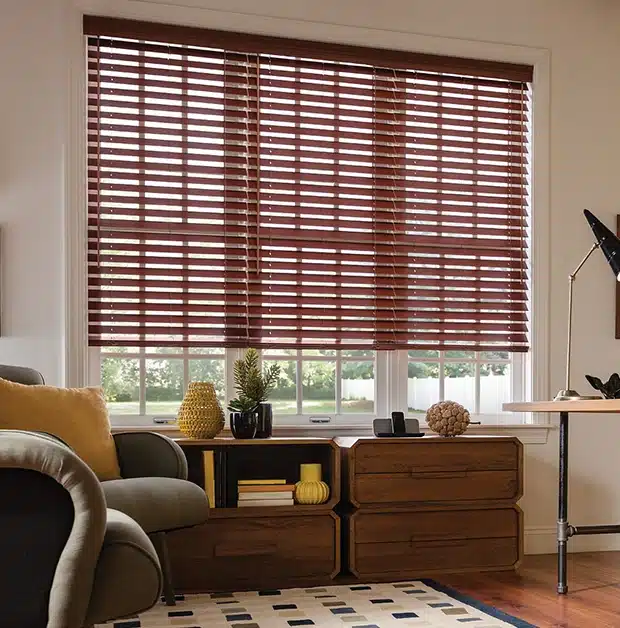
| Wood Blinds (2-inch) | 95% (closed) | 35-40% | High | Craftsman, Bungalow |
Installation Considerations Unique to Historic Windows
Protecting Original Wood Trim
Your Monte Vista bungalow’s original longleaf pine casings are irreplaceable—that species is now commercially extinct. Any blind installation must minimize new penetrations. We use precision inside-mount brackets requiring only two small screws per bracket, positioned to be invisible when blinds are removed. For outside-mount applications on delicate plaster reveals, tension-mount systems sometimes eliminate drilling entirely.
Irregular Window Dimensions
Pre-1920 San Antonio homes rarely feature perfectly square window openings. Settlement, hand-built construction, and 100+ years of Texas temperature swings mean your window frames may vary by half an inch or more corner to corner. Every opening requires individual measurement—templates from one window won’t transfer accurately to the next. Factory-cut blinds from national retailers routinely arrive with gaps or fitting failures in these applications.
Weight Considerations for Plaster Walls
Historic lime plaster over wooden lath differs dramatically from modern drywall. Heavy plantation shutters require anchoring into the underlying wood structure, not just the plaster surface. Attempting standard drywall anchors in a King William Victorian guarantees eventual failure—often pulling chunks of original plaster with it.
“We measured every window twice before ordering. The measuring process alone took over an hour for our twelve windows, but that precision meant every shutter fit perfectly against the 1904 casings. Nothing got damaged.”
— Margaret S., Monte Vista homeowner since 2018, reporting 28% reduction in summer CPS Energy bills after plantation shutter installation
Energy Savings You Can Measure
San Antonio homeowners in historic districts consistently report 22-35% reductions in summer cooling costs after installing properly specified window treatments (Source: CPS Energy Home Energy Audit Program Data, 2022). Given that cooling represents approximately 50% of the average San Antonio home’s annual energy use (Source: U.S. Energy Information Administration, 2023), this translates to meaningful savings.
For a typical 2,400-square-foot King William Victorian with original single-pane windows, annual savings range from $480 to $840 depending on current energy costs, existing window orientation, and treatment selection. At current CPS Energy residential rates averaging $0.11 per kWh, your investment in quality historic-appropriate blinds pays for itself within four to seven years—while simultaneously protecting furnishings worth far more.
Working With Preservation Requirements
Before purchasing any window treatments visible from public rights-of-way, confirm your property’s designation level with San Antonio’s Office of Historic Preservation. Properties designated as Level A (exceptional significance) face stricter review than Level B or C structures. Even if your Monte Vista home falls outside formal district boundaries, deed restrictions may impose similar appearance standards.
When preparing for Historic and Design Review Commission review—if required for your installation—document:
- Existing window treatment conditions (photograph each window interior and exterior)
- Proposed blind or shade material, color, and mounting method
- How the new treatment appears from the street (sample photographs preferred)
- Any structural modifications required (typically none for standard blind installation)
Ready to protect your San Antonio historic home the right way? Schedule your free historic property consultation with specialists who understand both your preservation obligations and your comfort needs.
Why Local Expertise Matters
National blind retailers measure in standardized increments. They’ve never navigated a King William approval process. Their installers—if they offer installation at all—work from cookie-cutter instructions that don’t account for century-old construction. When something goes wrong, you’re on hold with a call center 1,200 miles away.
Working with San Antonio-based historic home specialists means:
- Measurements accounting for your home’s actual construction methods and materials
- Familiarity with HDRC expectations and documentation requirements
- Installation techniques refined across hundreds of historic properties
- Warranty service that doesn’t require shipping products across the country
- Understanding of local climate challenges and appropriate solutions
Your 1895 Victorian near the Guenther House or 1923 craftsman in Monte Vista deserves better than mass-market solutions designed for 2023 tract homes. The windows that have graced your historic San Antonio home for a century require treatments that will protect them—and your comfort—for decades more.
Protect your historic home’s integrity with period-appropriate blinds. Contact us today for a specialized historic property consultation and receive a detailed proposal tailored to your specific windows, architectural style, and preservation requirements.
Frequently Asked Questions
Do I need HDRC approval before installing interior blinds in my King William home?
Interior window treatments typically do not require formal Historic and Design Review Commission approval unless they substantially alter the exterior appearance visible from public streets. However, properties with Level A designation or specific deed restrictions may have additional requirements. We recommend confirming your property’s status with San Antonio’s Office of Historic Preservation before purchasing. Our consultation includes guidance on navigating this process for your specific address.
How do I clean vintage window blinds without damaging them or my historic window frames?
For plantation shutters and wood blinds in historic homes, use a dry microfiber cloth or soft brush attachment on your vacuum’s lowest suction setting monthly. Avoid water-based cleaners on wood products, as moisture can warp materials and damage adjacent vintage trim. Woven wood shades require even gentler treatment—light vacuuming only, never wet cleaning. Cellular shades can be spot-cleaned with a damp cloth for isolated stains. We provide care instructions specific to your window treatment type and your home’s construction materials at installation.
Can solar-reflective blinds help my historic home qualify for CPS Energy rebates?
CPS Energy’s residential rebate programs primarily focus on HVAC equipment, insulation, and window replacements rather than window treatments. However, documented energy-efficient improvements may support applications for the Residential Energy Efficiency program’s whole-home approach. More valuable for historic homeowners: properly installed blinds reducing your cooling load extend HVAC equipment lifespan and reduce peak demand charges. We can provide documentation of your window treatment’s thermal performance specifications for energy audit purposes.
What warranty coverage applies to blinds installed in homes with extreme temperature fluctuations?
Quality manufacturers account for San Antonio’s temperature range in product engineering and warranty terms. We exclusively install treatments from manufacturers offering minimum five-year warranties covering material defects, finish degradation, and mechanical failure under normal Texas climate exposure. Composite and engineered products often carry longer warranties than solid wood in high-heat applications. Your proposal specifies exact warranty terms for each product recommended for your historic home’s specific conditions.